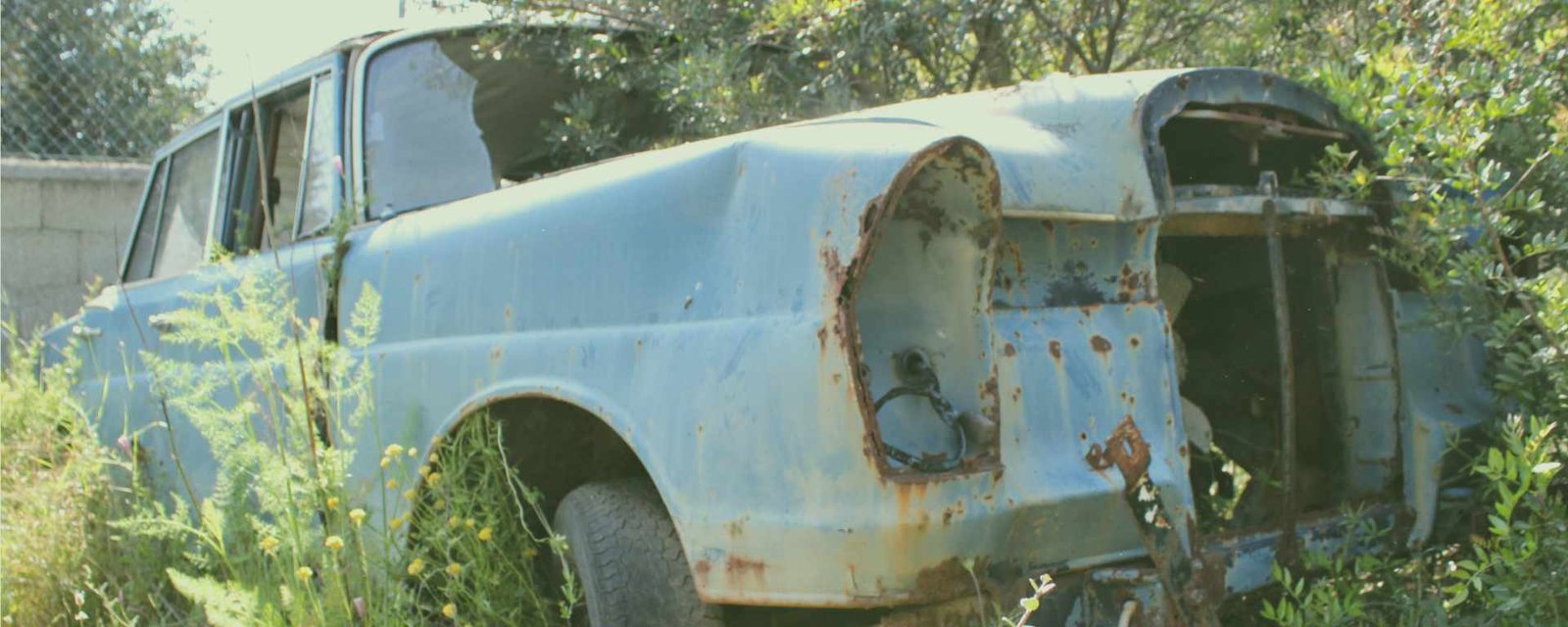
When a dream on wheels becomes a weight on your life—and how to tell the difference.
America loves cars. We also love the idea of a car.
That’s how so many “project cars” are born: a classic truck in the back of the garage, a vintage coupe under a tarp, a half-restored something that’s been “almost ready” since the last decade.
And look—I get it. A project car can represent freedom, craftsmanship, nostalgia, and identity. It can connect you to a community. It can be a genuine source of joy.
But it can also become a quiet form of clutter—one of the biggest, most expensive kinds—because it takes up a lot more than space.
So let’s talk about it the Smart Reduction way: not with shame, not with judgment, but with clarity.
The Question Isn’t “Do I Like This Car?”
The real question is:
Is this car still an active project—or has it become a parked promise?
A project car is like an unopened box with a bigger footprint. It holds potential. But potential only pays off when it turns into action.
This is exactly where my Clutternomics™ lens helps.
The Clutternomics™ Lens for a Project Car
1) Space Cost: What is this car displacing?
A non-running car takes up prime real estate.
- A garage bay that could hold a daily driver
- A workshop space you could actually use
- Room for bikes, gear, tools, storage that supports your current life
- Or simply: breathing room
If the car is outside, the space cost continues:
- it affects curb appeal
- limits parking
- can create neighbor tension
- and it often deteriorates faster
Clutternomics question:
What would this space enable if it were free?
2) Use & Access: Are you actually working on it?
Let’s be honest. The most common restoration schedule is:
“Next spring.”
Then it becomes:
“When things calm down.”
And then:
“Someday.”
If you haven’t touched the project in a year, the issue isn’t motivation.
It’s reality.
Clutternomics question:
When did I last move this project forward in a real way?
3) Value & Replacement: Does the math work?
Some project cars can be worth real money—but most aren’t, at least not in their current condition.
Ask:
- What would this car sell for today, as-is?
- What will it cost to make it roadworthy? (not perfect—just safe and legal)
- What’s the likely resale value once done?
- Are you factoring in your time—honestly?
This is where many people get stuck: we tend to overvalue what we already own, especially when it carries a story.
Clutternomics question:
Am I holding value—or holding onto a story?
Stories matter, but stories don’t need a garage bay.
4) Replacement Reality: Are parts and skills available?
This one is practical and often overlooked:
- Are parts still available at reasonable cost?
- Do you have a reliable mechanic or specialist if needed?
- Are you equipped for the work? (tools, lift, storage, safe workspace)
- Do you enjoy this type of work—or does it stress you out?
A car can be a hobby. It can also become a source of low-grade guilt.
Clutternomics question:
Am I set up to succeed with this project—or set up to postpone it?
5) Opportunity Cost: Is this the best use of your time and energy?
Even if the car is “worth it” financially, ask the deeper question:
- Does restoring this car move you toward the life you want now?
- Would you rather be traveling, spending time with family, building fitness, starting a new hobby, or simply living with less stress?
There’s no moral ranking here. But time is your most precious commodity.
Clutternomics question:
If I freed up this time, what would I do more of?
When a Project Car Does Make Sense (And You Should Go For It)
I’m not anti-classic-car. Not at all.
A project car can be a fantastic “keeper” if the conditions are right.
Here are signs it’s a healthy project:
✅ It’s close to running—or already runs
✅ You work on it consistently (even small steps count)
✅ You have the space, tools, or support
✅ Parts are available and affordable
✅ You’re part of a classic car community—or want to be
✅ It brings you genuine joy, not lingering guilt
✅ You can describe the next 3 steps clearly
If that’s you: go for it.
Join the community. Take it to meets. Make it a living hobby, not a dormant obligation.
A classic car is at its best when it’s:
- driven
- shared
- appreciated
- and maintained with pride
When It’s Time to Let It Go (The Gentle Truth)
A project car is no longer a project when:
- it hasn’t moved forward in years
- you don’t have time (and won’t soon)
- you don’t have the skills or desire
- the parts are hard to source
- you feel stuck, not excited
- it has become a stressor in your space
If that’s the case, letting go is not failure.
It’s smart reduction.
Because you can still love classic cars without storing one.
You can:
- go to car shows
- visit museums
- join a local car club
- help a friend restore theirs
- volunteer at an automotive heritage org
- or simply admire them without managing them
A Simple Decision Framework: Keep, Commit, or Release
If you want a clean way to decide, pick one of these three paths:
Option A: KEEP (and make it real)
- Set a start date
- Define 3 next steps
- Budget time + money
- Create a realistic timeline
- Join a community so it becomes social and fun
Option B: COMMIT TO A SALE (but do it intelligently)
- Clean it up enough to photograph well
- Gather paperwork, keys, parts, history
- List it honestly (as-is)
- Price it realistically
- Choose a deadline
Option C: RELEASE (and reclaim your life space)
- Donate (some orgs accept vehicles)
- Sell for parts / to a restorer
- Scrap responsibly if it’s truly beyond saving
- Reclaim the garage bay and use it intentionally
The Big Takeaway
A project car is either:
- a living hobby
- or a parked promise
And your home shouldn’t be a storage facility for promises.
It should support the life you’re living now.
If you want help thinking it through—without pressure and without judgment—I’m happy to help you apply the Clutternomics lens and decide what makes sense for you.
Smart Reduction is about choosing keepers first.
Sometimes that includes a classic car.
Sometimes the keeper is the space you get back.